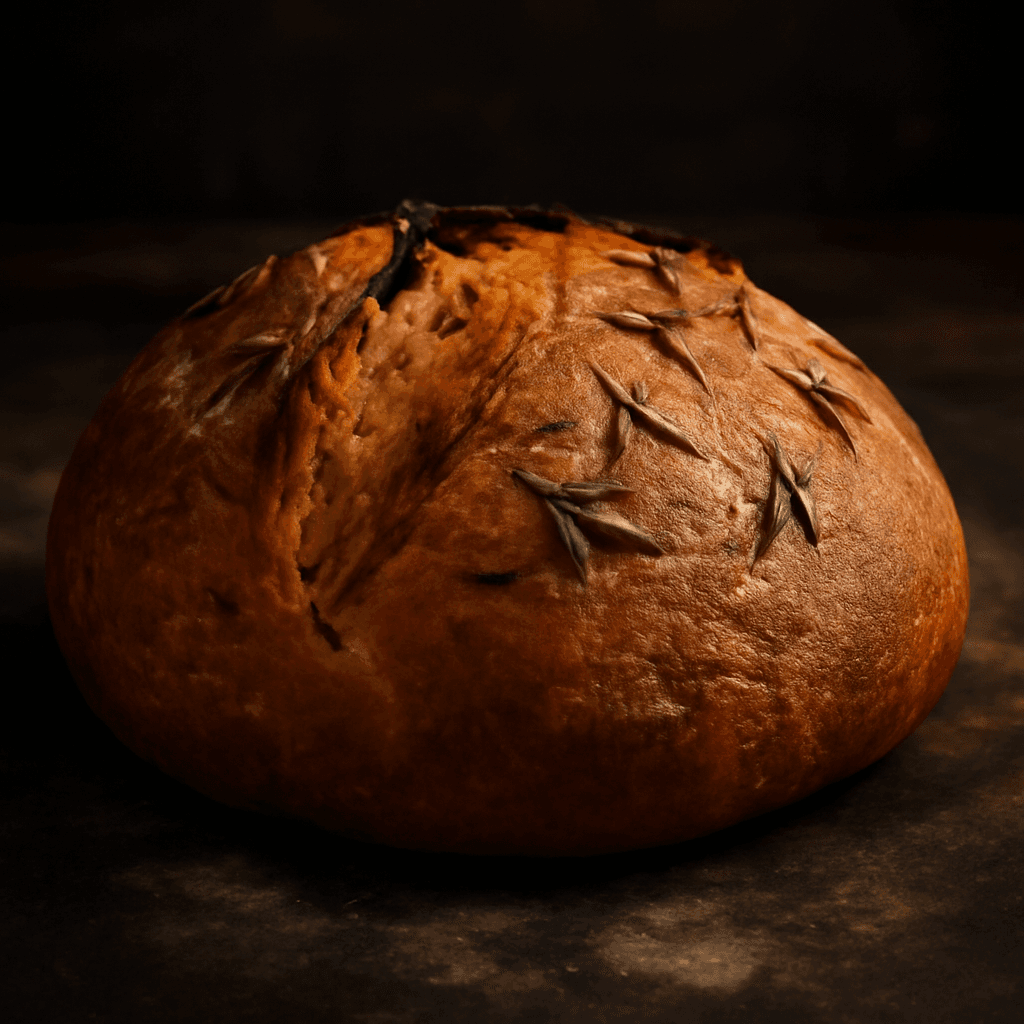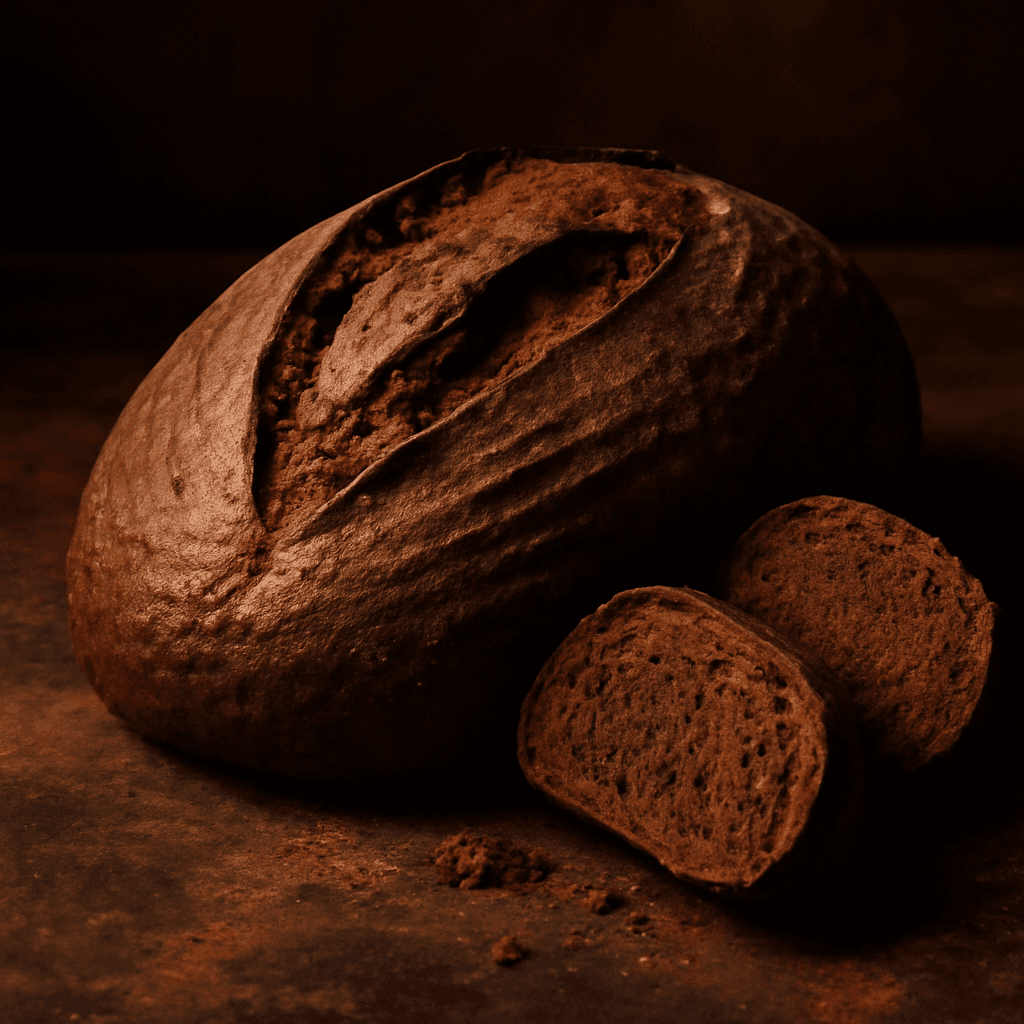
Sourdough Pumpernickel - freshly baked bread

Sourdough Pumpernickel

Sourdough

Dark, dense, and intensely flavoured pumpernickel made with sourdough starter, rye flour, and a long fermentation.

Prep Time

30 min

Proof Time

14h

Bake Time

50 min

Servings

10

Calories

165

Ingredients

  • 500 g bread flour
  • 350 g water (warm)
  • 100 g active sourdough starter
  • 10 g fine sea salt

Instructions

  1. 1

    Autolyse

    Mix flour and water. Cover and rest 30–60 minutes.

  2. 2

    Add Starter & Salt

    Add active starter and salt. Mix using the pinch-and-fold method until incorporated.

  3. 3

    Bulk Ferment

    Over 4–5 hours, perform 4–6 stretch-and-folds spaced 30–45 minutes apart.

  4. 4

    Pre-Shape

    Turn onto a floured surface. Shape into a loose round and bench rest 20 minutes.

  5. 5

    Final Shape

    Shape into a tight boule. Place seam-side up in a floured banneton.

  6. 6

    Cold Proof

    Cover and refrigerate 8–16 hours.

  7. 7

    Score & Bake

    Preheat Dutch oven to 500°F. Score dough. Bake covered 20 min, then 450°F uncovered 20–25 min.

Baker's Notes

Your starter must be active and bubbly before you use it. Do the float test — if a spoonful floats in water, it's ready to leaven bread.

Baker Thomas Moreau

About This Recipe

This is a beautifully simple sourdough loaf with a long, slow fermentation that builds real depth of flavour. The extended cold proof gives it a bright tang and a crumb that's tender yet substantial — nothing like the flat, flavourless loaves you get at the grocery store.

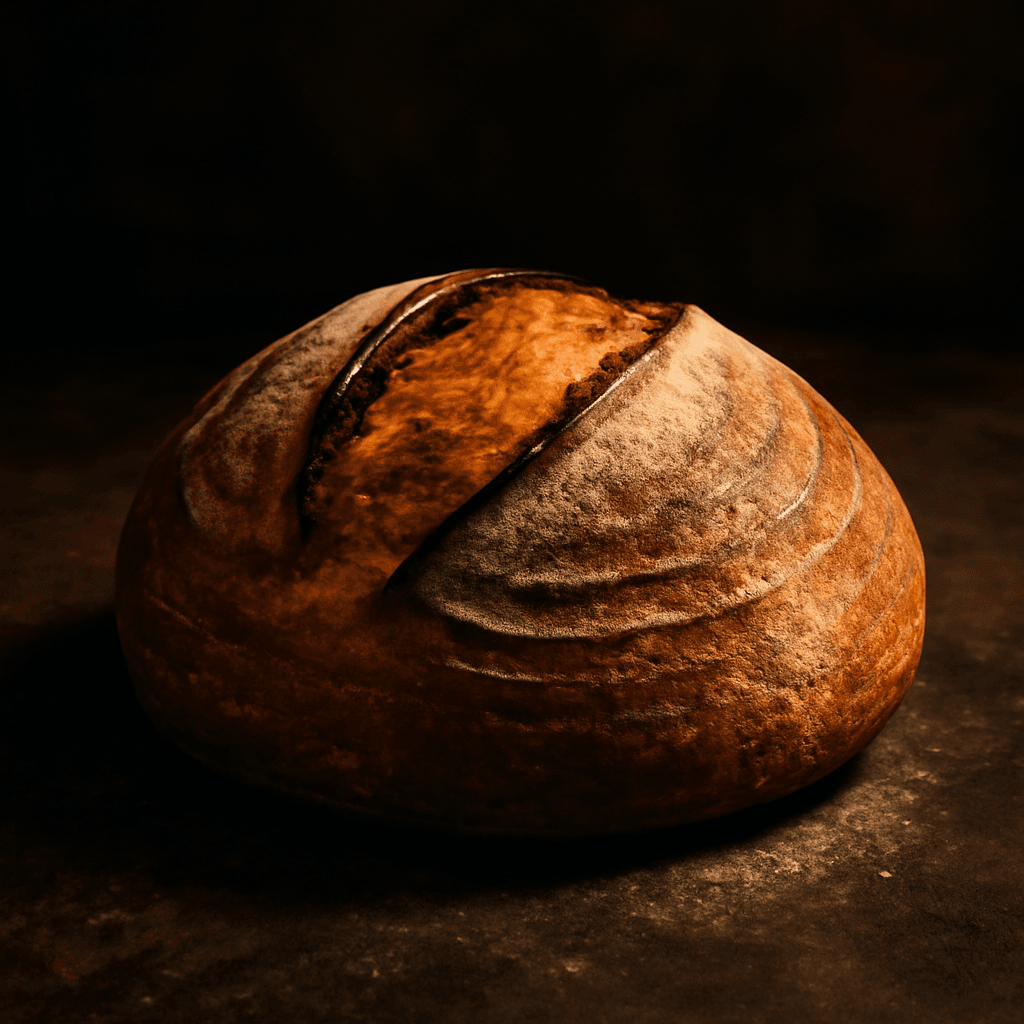
Canadian home cooks love this recipe because it rewards patience. You'll end up with a loaf that has a crackly, blistered crust, a dark golden interior, and that unmistakable sourdough aroma that fills your kitchen.

Tips for the Best Sourdough Pumpernickel

Assurez-vous que votre levain est vraiment actif avant de mélanger — s'il ne passe pas le test de flottaison, votre pain ne lèvera pas correctement. La preuve froide est où se développe le goût acidulé, alors ne la sautez pas. Et gardez le couvercle du faitout pendant les 20 premières minutes pour piéger la vapeur.

What to Serve With It

Slice thick and serve with house-made butter, smoked salmon, or sharp cheddar. It pairs beautifully with a bowl of French onion soup or a simple salad dressed with olive oil and lemon. Toasted slices make an excellent base for avocado toast topped with everything bagel seasoning.

Storage & Reheating

Keep the loaf in a paper bag at room temperature for up to three days — this preserves the crust better than plastic. Slice only what you need each morning. For longer storage, wrap tightly and freeze for up to a month; toast straight from frozen for best results.
Nutrition Facts

165

cal

7g

Protein

5g

Fat

35g

Carbs

4g

Fiber

247mg

Sodium

Frequently Asked Questions

Can I skip the cold proof?+

You can, but you'll lose the tangy flavour that makes sourdough special. The cold proof slows fermentation, giving the yeast and bacteria time to develop complex acids. Skip it only if you're short on time.

Why does my crust come out pale and soft?+

This usually means you didn't trap enough steam during the first stage of baking. Keep the Dutch oven lid on for the full 20 minutes, and make sure your oven is fully preheated before loading the dough.

How do I know when the loaf is done baking?+

Check the internal temperature with an instant-read thermometer — it should read 205°F to 210°F. A well-baked loaf will also sound hollow when you tap the bottom. If it's underbaked, return it to the oven for another 5 minutes.

Can I use whole wheat flour instead of bread flour?+

You can substitute up to 25% whole wheat for bread flour, but too much will make the loaf heavy and dense. Whole wheat absorbs more water, so you may need to add a splash more liquid to the dough.

My dough spread too much during baking. What happened?+

This usually means the gluten wasn't developed enough or the final shape was too loose. Make sure you're doing the stretch-and-folds consistently during bulk fermentation, and tighten the final shape before placing it in the banneton.

Tips & Tricks

  • Your starter must be active and bubbly — do the float test.
  • The cold proof is where the tangy flavour develops — don't skip it.
  • Steam from the Dutch oven is essential for a crispy, blistered crust.

Reviews (4)

Jennifer K.★★★★★

This is now our go-to bread recipe. The house smelled incredible while it was baking. My kids couldn't wait to tear into a warm slice.

André G.★★★★★

Just like from the bakery! The crust is crispy and the crumb is soft. Bravo for this extraordinary recipe.

Chantal D.★★★★★

Easy to prepare and so delicious! Even my picky kids went for seconds. This bread has become a staple in our home.

Pierre T.★★★★★

Excellent recipe. I followed the instructions to the letter and the result was perfect. My wife loved it. The best homemade bread I've made.