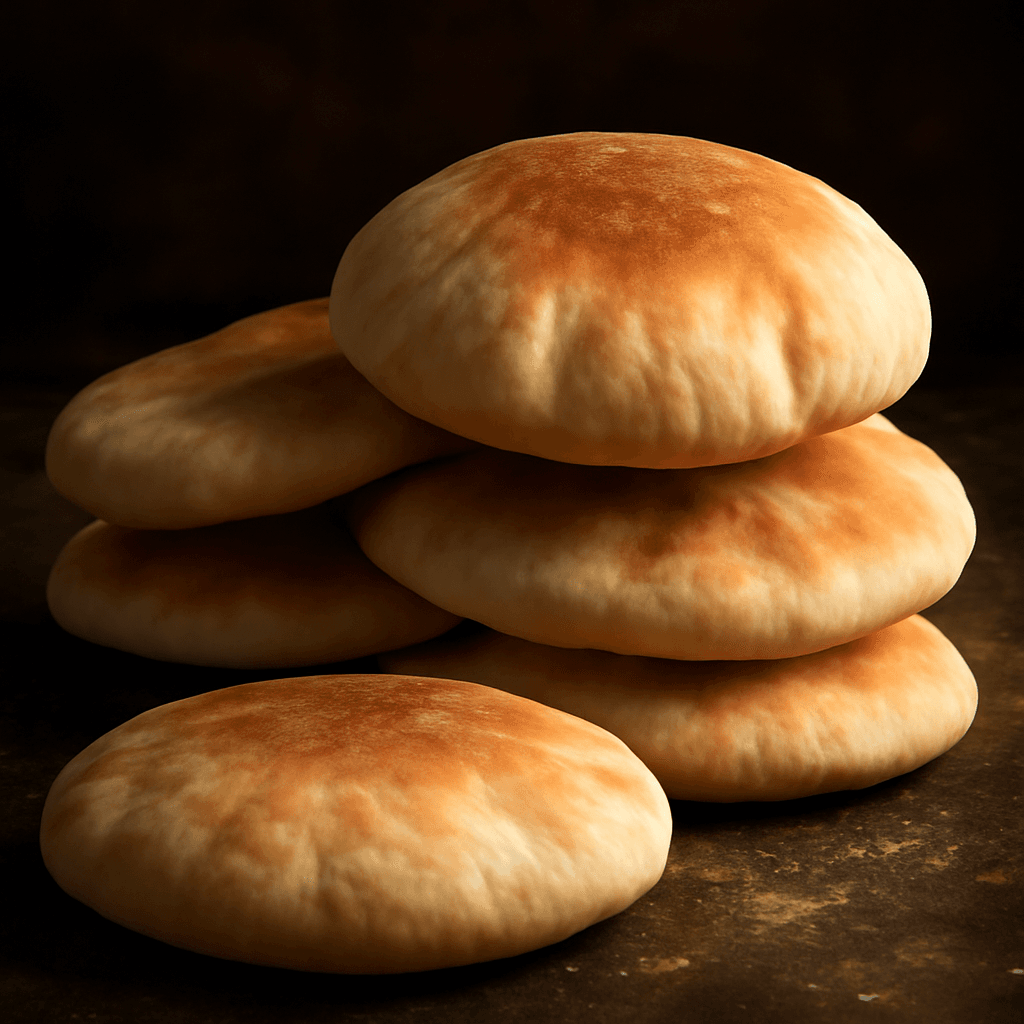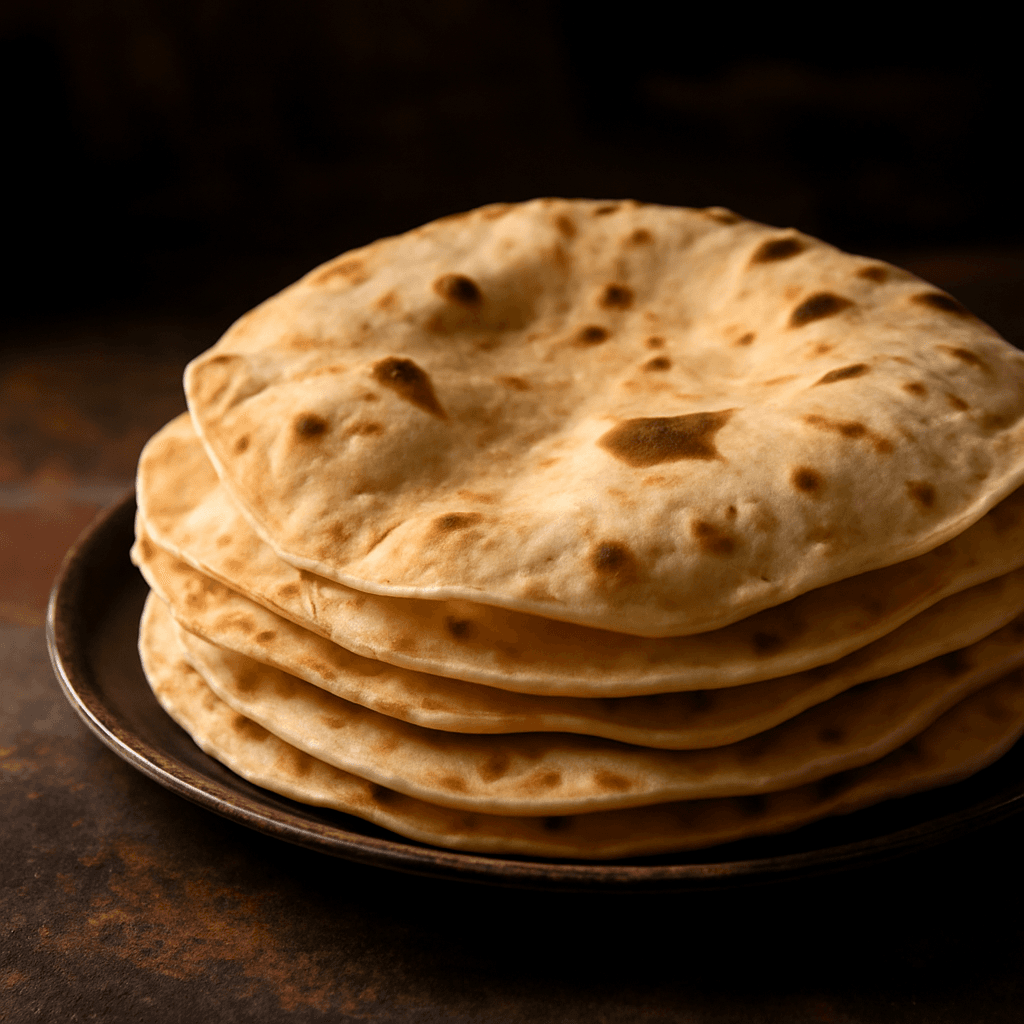
Chapati (Indian Flatbread) - freshly baked bread

Chapati (Indian Flatbread)

Flatbreads

Simple, unleavened whole wheat flatbread cooked on a dry skillet. A staple of Indian home cooking.

Prep Time

10 min

Proof Time

20 min

Bake Time

15 min

Servings

8

Calories

120

Ingredients

  • 2½ cups all-purpose flour
  • 1 tsp instant yeast
  • ¾ cup warm water
  • 2 tbsp olive oil
  • 1 tsp salt
  • 1 tsp sugar

Instructions

  1. 1

    Mix

    Combine flour, yeast, sugar, and salt. Add water and oil. Mix until a dough forms.

  2. 2

    Knead & Rest

    Knead 5 minutes until smooth. Cover and rest 30–60 minutes.

  3. 3

    Shape

    Divide into portions. Roll each into thin rounds on a floured surface.

  4. 4

    Cook

    Cook on a hot skillet or baking surface until puffed and charred in spots.

Baker's Notes

A screaming-hot cooking surface is the single most important factor in flatbread baking. Get your skillet or stone as hot as it will go.

Baker Thomas Moreau

About This Recipe

Chapati is one of those humble flatbreads that quietly transforms every Indian meal around it. This version uses yeast and olive oil to give the dough a tender crumb and a subtle sweetness, while a screaming-hot skillet coaxes it into those signature puffy pockets with lightly charred spots. The result is soft, pliable bread that's perfect for scooping up dal or wrapping around roasted vegetables.

Canadian home cooks love chapati because it delivers restaurant-quality results without fancy equipment or hours of prep. The dough comes together in minutes, and once you learn the rhythm of rolling and flipping on the stovetop, you'll find yourself reaching for chapati more often than you ever expected.

Tips for the Best Chapati (Indian Flatbread)

Assurez-vous que votre poêle est bien préchauffée avant que la première boule de pâte ne touche la surface — une poêle très chaude est ce qui crée le gonflement spectaculaire. Travaillez rapidement quand vous façonnez : roulez chaque portion finement et uniformément, puis cuisez juste jusqu'à ce que vous voyiez des bulles se former et des taches brun clair apparaître sous la face avant de retourner.

What to Serve With It

Serve chapati warm alongside a bowl of chana masala, a creamy palak paneer, or simple dal tadka. They're equally at home with roasted cauliflower and chickpeas, or as a wrap for spiced potato filling. A pat of salted butter rubbed across the top adds richness, and a squeeze of lime brightens everything up.

Storage & Reheating

Stack cooked chapatis under a clean kitchen towel to keep them soft and pliable — this traps steam and prevents drying. They're best enjoyed the same day they're made, but any leftovers can be wrapped tightly and refrigerated for up to two days. Reheat on a hot skillet for thirty seconds per side, or microwave wrapped in a damp paper towel.
Nutrition Facts

120

cal

5g

Protein

5g

Fat

30g

Carbs

1g

Fiber

258mg

Sodium

Frequently Asked Questions

Can I make chapati dough ahead?+

Yes — prepare the dough, let it rest covered in the fridge for up to twenty-four hours, then bring it to room temperature before rolling and cooking. The flavour deepens slightly overnight.

Why isn't my chapati puffing up?+

Your cooking surface probably isn't hot enough. Chapati needs serious heat to create the steam pocket that causes the puff. Preheat your skillet over medium-high heat for several minutes before cooking.

Can I use whole wheat flour instead of all-purpose?+

Absolutely. Swap in whole wheat flour for a nuttier flavour and heartier texture. You may need a splash more water since whole wheat absorbs moisture differently, and the dough will feel slightly denser to roll.

How do I keep chapatis from getting tough?+

Don't overwork the dough during kneading, and avoid rolling too thick. Also, don't stack finished chapatis directly against each other without a towel between them — trapped moisture makes them gummy.

What's the difference between chapati and roti?+

In most Indian households, the terms are interchangeable. Technically, roti refers to any unleavened flatbread while chapati specifically means the whole wheat version cooked on a tawa or skillet.

Tips & Tricks

  • A screaming-hot cooking surface is essential for the best results.
  • Stack cooked flatbreads under a towel to keep them warm and pliable.
  • Most flatbreads are best eaten the same day they're made.

Reviews (4)

Marie L.★★★★★

Made this last weekend and my family loved it! The bread came out perfectly golden with a beautiful crust. Will definitely be making this again.

Michael W.★★★★★

This recipe is a keeper. The Baker's Notes really helped me understand the technique. My new favourite bread to bake on weekends.

Sarah M.★★★★★

So glad I found this recipe. The instructions are clear and the result is consistently great. I've made it four times already and it's perfect every time.

David C.★★★★★

Bakery-quality bread at home. I followed the recipe exactly and it turned out amazing. The proofing tips really helped.