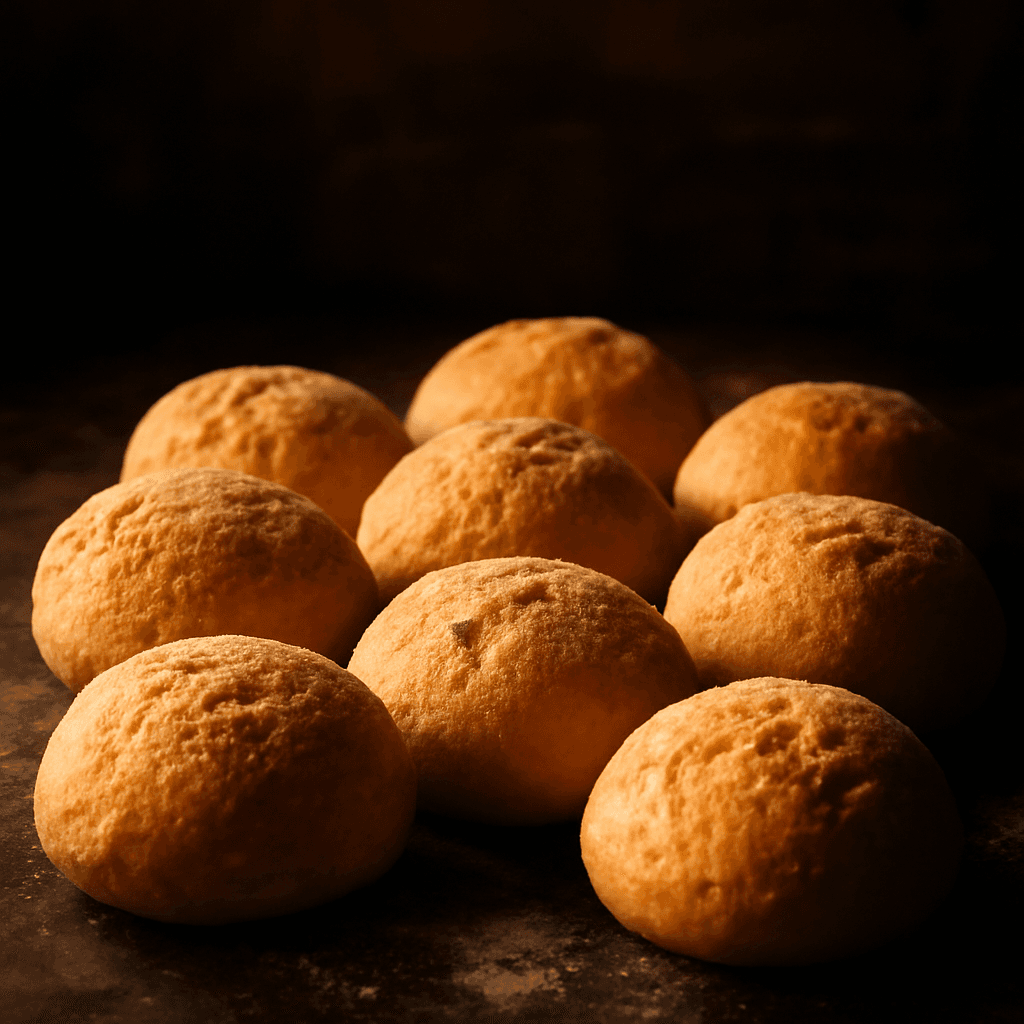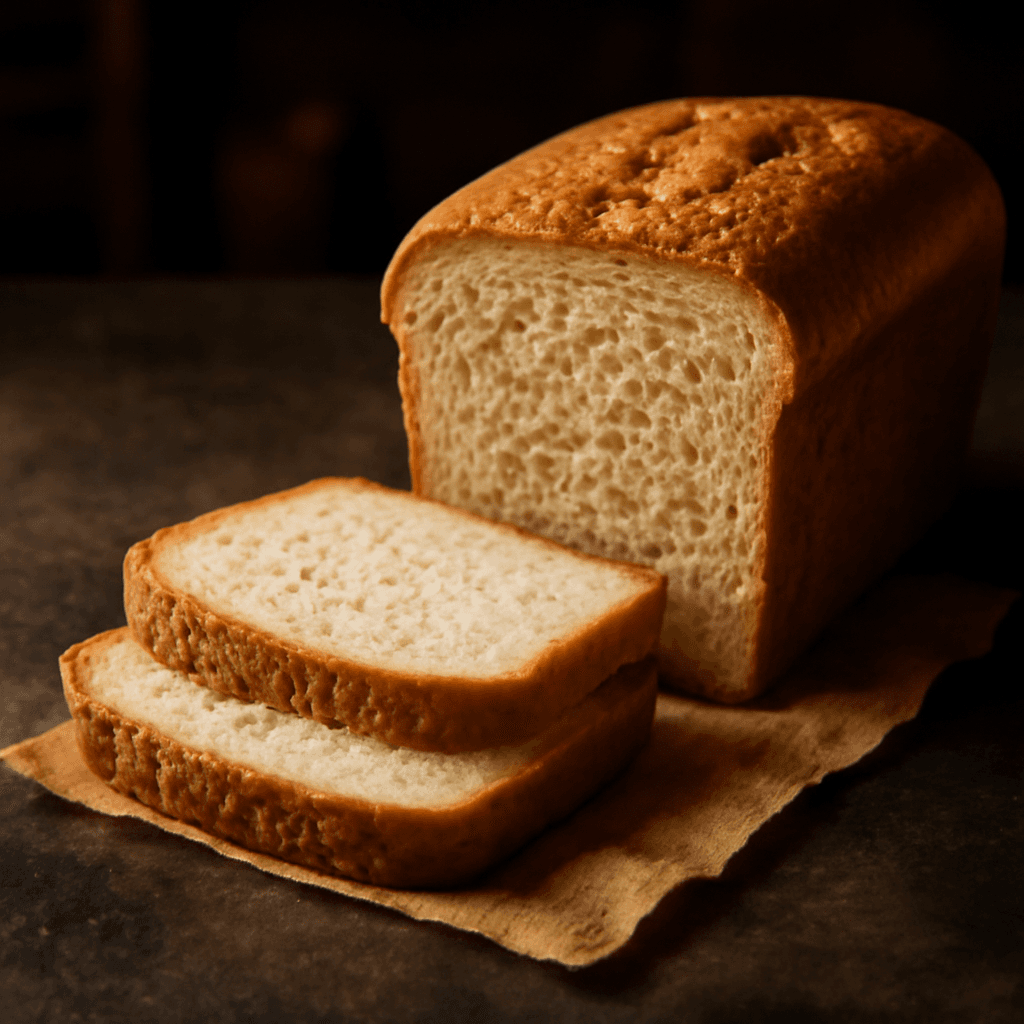
Gluten-Free Sandwich Bread - freshly baked bread

Gluten-Free Sandwich Bread

Gluten-Free Bread

Soft, sliceable sandwich bread that happens to be gluten-free. Made with a blend of rice flour, tapioca starch, and potato starch.

Prep Time

15 min

Proof Time

45 min

Bake Time

40 min

Servings

10

Calories

170

Ingredients

  • 1½ cups rice flour blend
  • ½ cup tapioca starch
  • ¼ cup potato starch
  • 2¼ tsp instant yeast
  • 1 tsp xanthan gum
  • 1 cup warm milk
  • 2 tbsp honey
  • 2 tbsp olive oil
  • 1 tsp salt
  • 2 large eggs

Instructions

  1. 1

    Mix Dry

    Combine rice flour, tapioca starch, potato starch, xanthan gum, yeast, and salt.

  2. 2

    Mix Wet

    Whisk warm milk, oil, honey, and eggs.

  3. 3

    Combine

    Add wet to dry and mix 3–4 minutes until a thick, sticky batter forms.

  4. 4

    Rise

    Pour into a greased pan. Cover and rise 30–45 minutes until nearly doubled.

  5. 5

    Bake

    Bake at 375°F (190°C) for 35–40 minutes until golden and internal temp reaches 200°F.

Baker's Notes

Gluten-free bread dough is more like a thick batter than a traditional dough — that's completely normal. Don't keep adding flour trying to make it behave like wheat dough.

Baker Thomas Moreau

About This Recipe

There is something quietly triumphant about pulling a loaf of gluten-free bread from the oven that slices cleanly and holds together on a sandwich. This one delivers exactly that — soft crumb, gentle sweetness from the honey, and a tender enough texture that you forget it's free of wheat. The trick is letting the xanthan gum do its work alongside the egg and starch blend to build structure where gluten normally would.

Canadian home cooks have been turning to recipes like this for years, especially families managing coeliac disease or gluten sensitivity. What sets this version apart is how forgiving it is: the batter-style method means no kneading, no fussy technique, just whisk, pour, bake, and toast. It's the kind of bread that earns a place in the weekly rotation because it actually works.

Tips for the Best Gluten-Free Sandwich Bread

La pâte sera épaisse et collante — bien loin de ce que vous attendez d'une pâte à pain traditionnelle, et c'est tout à fait normal. N'ajoutez pas de farine supplémentaire pour la raffermitir ; l'équilibre d'humidité est ce qui donne à la miche finie sa tendreté. Quand vous la versez dans le moule, lissez le dessus avec une spatule humide pour une cuisson uniforme, et vérifiez la température interne avec un thermomètre pour atteindre 200 degrés Fahrenheit afin d'avoir un cœur bien cuit sans assécher la croûte.

What to Serve With It

This bread shines when toasted — a quick run through the toaster brings out a lovely golden crust that contrasts with the soft interior. Serve it with butter and jam for breakfast, or layer it with smoked salmon and cream cheese for a lunch sandwich that feels genuinely satisfying. It also pairs beautifully with a bowl of tomato soup on cold Ontario evenings, or as a base for grilled cheese with sharp cheddar and caramelized onions.

Storage & Reheating

Keep the loaf in an airtight container or wrapped tightly in foil at room temperature for up to three days. For longer storage, slice and freeze individual portions — they thaw quickly and re-toast well. If the bread feels slightly dense after sitting, a brief trip back through the toaster revives the texture almost completely. Avoid refrigerating it, which accelerates staling in gluten-free loaves.
Nutrition Facts

170

cal

6g

Protein

6g

Fat

31g

Carbs

2g

Fiber

387mg

Sodium

Frequently Asked Questions

Can I use a store-bought gluten-free flour blend instead of mixing my own?+

Yes — look for a blend that already contains xanthan gum, and reduce or omit the added gum accordingly. Measure carefully since different brands absorb liquid differently.

Why does the batter look so much thicker than regular bread dough?+

Without gluten to develop elasticity, the recipe relies on starches and eggs for structure. A thick, sticky batter is exactly right and produces the tender crumb this bread is known for.

My bread came out dense. What went wrong?+

Check your yeast freshness and ensure the milk was warm, not hot, when you mixed it. Under-proofing is another common culprit — let the batter rise until nearly doubled before baking.

Can I substitute almond or coconut flour for some of the rice flour?+

Almond and coconut flours absorb liquid very differently and will throw off the balance. If experimenting, replace no more than one-quarter of the rice flour and adjust the milk accordingly.

How do I know when the bread is done baking?+

Use an instant-read thermometer — the internal temperature should reach 200 degrees Fahrenheit. The top should be golden brown, and the loaf should sound hollow when tapped on the bottom.

Tips & Tricks

  • Xanthan gum replaces the binding role of gluten — don't skip it.
  • GF bread dough is more like a thick batter than a traditional dough — that's normal.
  • Toast GF bread for the best texture and flavour.

Reviews (5)

Michael W.★★★★★

This recipe is a keeper. The Baker's Notes really helped me understand the technique. My new favourite bread to bake on weekends.

Sarah M.★★★★★

So glad I found this recipe. The instructions are clear and the result is consistently great. I've made it four times already and it's perfect every time.

David C.★★★★★

Bakery-quality bread at home. I followed the recipe exactly and it turned out amazing. The proofing tips really helped.

Lisa P.★★★★★

Made this for a dinner party and everyone wanted the recipe. The bread was the star of the table — warm, crusty, and absolutely delicious.

Robert B.★★★★★

Five stars! The crust was perfectly crispy and the crumb was soft and airy. I'll never buy store-bought bread again.